Uplighting vs Downlighting: Which Is Right for Your Property?
Choosing between uplighting and downlighting depends on your goals. Toronto Outdoor Lighting designs layered strategies using both techniques to create dramatic landscapes while maintaining safe, functional illumination across Toronto and the GTA. Understanding when to uplight, when to downlight, and when to combine both ensures professional results.
Dramatic accents. Functional safety. Layered effects. We design it all.
Uplighting creates drama. Downlighting creates safety. Professional designs use both.
FX Luminaire & WAC Certified
Free On-Site Design Consultations
Energy-Efficient Low-Voltage LED
50,000+ Hour LED Lifespan
Understanding Uplighting vs Downlighting
Uplighting and downlighting are opposing techniques creating dramatically different effects. Understanding the differences - and when to combine them - is essential for professional landscape lighting design.
Uplighting positions light sources at ground level aiming upward, creating dramatic silhouette effects and highlighting texture and form. Downlighting positions fixtures above pointing downward, providing functional illumination and safe navigation. Professional designs frequently combine both for layered, sophisticated effects maximising visual impact while maintaining practical safety.
Uplighting vs Downlighting Comparison
| Characteristic | Uplighting | Downlighting |
|---|---|---|
| Fixture Position | At ground level, pointing upward | Mounted above, pointing downward |
| Primary Effect | Dramatic silhouette, texture emphasis | Functional illumination, safety |
| Best Uses | Trees, architectural features, accent elements | Pathways, entries, functional areas |
| Glare Risk | Moderate (light at eye level) | Low (light from above) |
| Shadow Effects | Dramatic shadows, theatrical | Subtle shadows, minimal contrast |
| Energy Use | Moderate (longer throw distances) | Lower (shorter distances) |
| Professional Approach | Accent lighting layered with downlighting | Base functional layer with uplighting accents |
Uplighting: Creating Dramatic Accent Effects
How Uplighting Works
Uplighting positions light sources at ground level (or low mounting points) aiming upward at target features. Creates dramatic silhouette effect where fixtures are invisible but illumination is prominent. Emphasises form, texture, and architectural details through shadow and contrast.
Best Applications for Uplighting
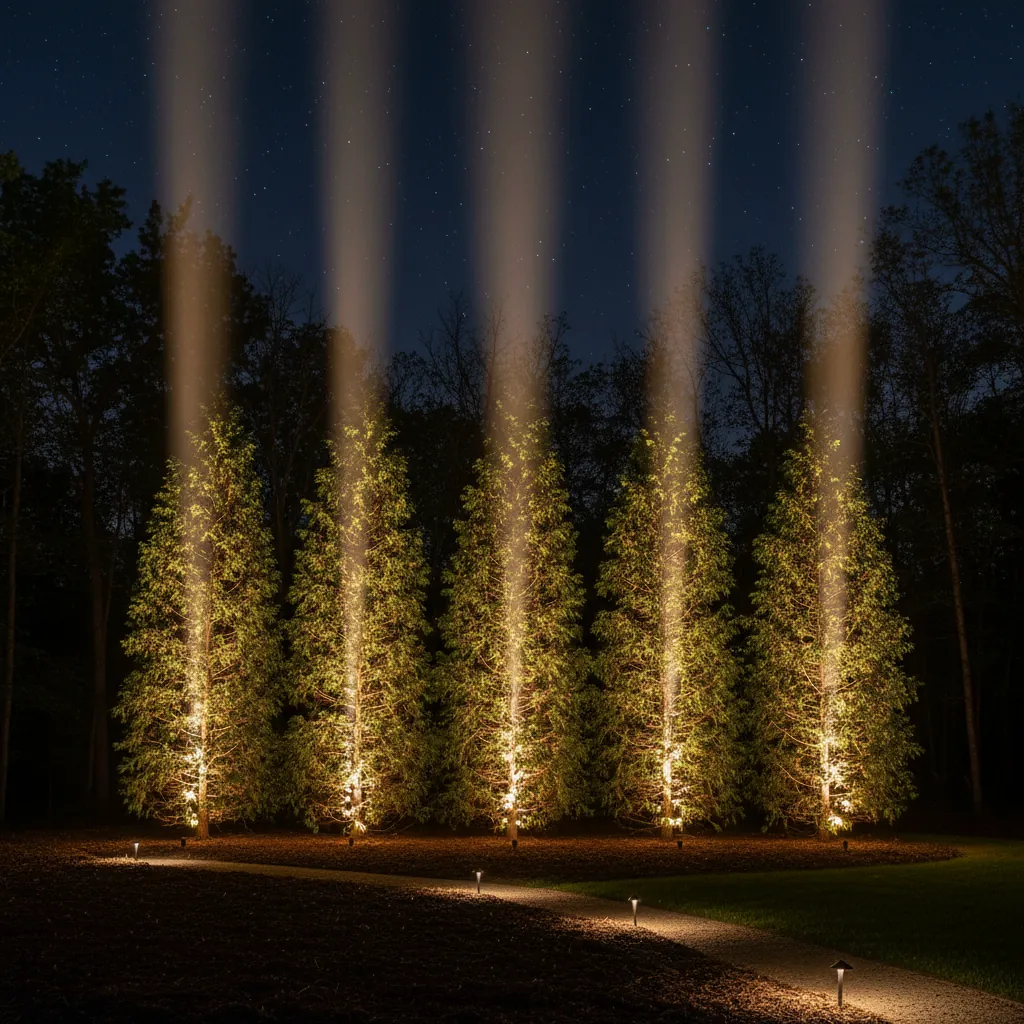
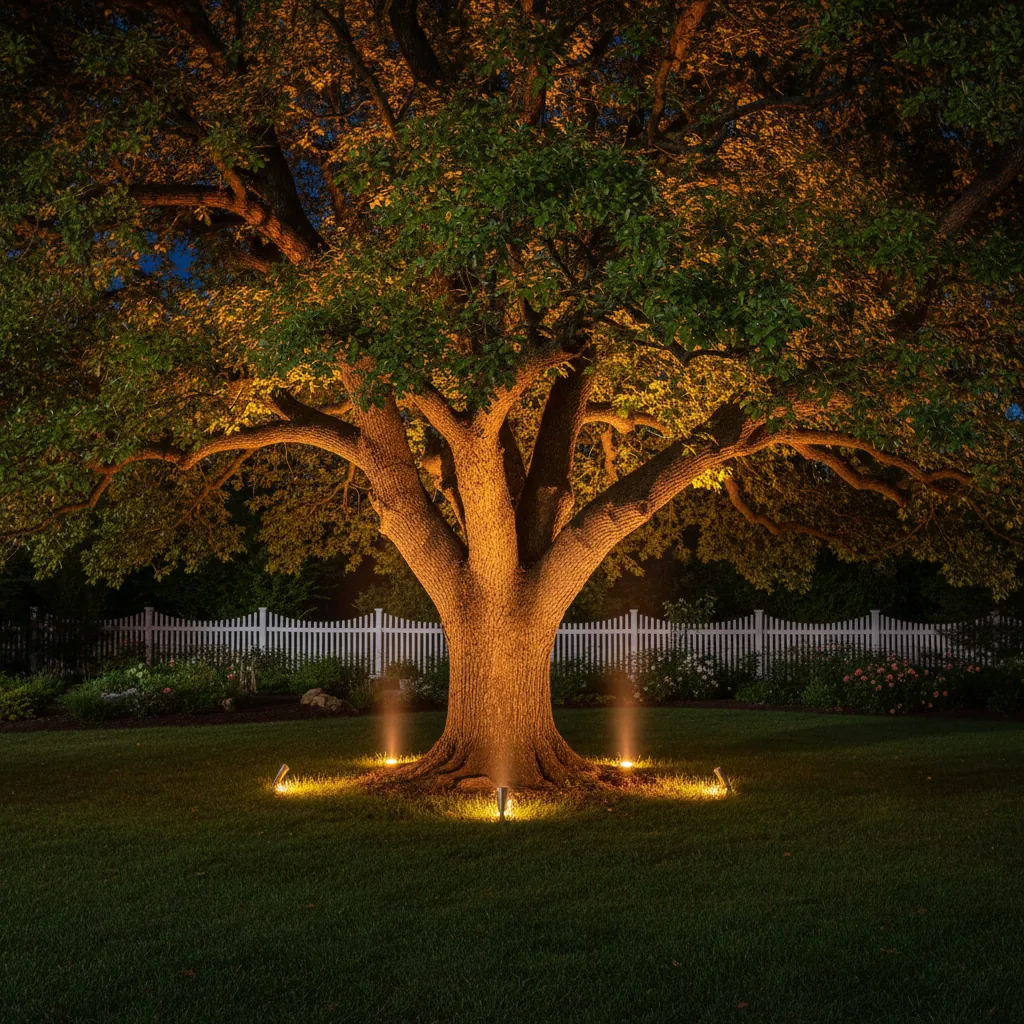
- Tree Lighting: Uplights at base of tree trunk highlight canopy shape and create silhouettes against sky
- Architectural Features: Stone corners, decorative trim, window surrounds gain dramatic emphasis
- Water Features: Fountains and pools create dramatic reflections and visual interest
- Accent Landscape: Boulders, sculptural elements, specialty plants showcase unique qualities
- Roofline Definition: Silhouetting buildings against night sky creates distinctive presence
Uplighting Fixture Types
- Spotlights (narrow beam 15-25°): Dramatic narrow focus, creates strongest silhouettes
- Flood Lights (wide beam 40-60°): Broader coverage, softer silhouette effect
- Submersible Uplights: For water features, rated IP67 or better
- Recessed Uplights: Conceal fixtures in ground or planting beds
Typical Uplighting Specifications
- Output: 15-35W typical for residential
- Spacing: 6-15 feet from target (depends on beam width)
- Installation Depth: 4-8 inches below grade
- Cost: $200-$500 per fixture installed
Downlighting: Creating Functional Illumination
How Downlighting Works
Downlighting positions fixtures above (on soffits, trees, posts, or pergolas) aiming downward to illuminate areas below. Creates soft, shadow-free illumination without glare. Primary purpose is functional safety and ambient environment lighting rather than dramatic accent effects.
Best Applications for Downlighting
- Pathway Safety: Illuminate walkways preventing trips and falls
- Entry Illumination: Brighten front doors and entry areas
- Deck/Patio Lighting: Provide ambient illumination for entertaining
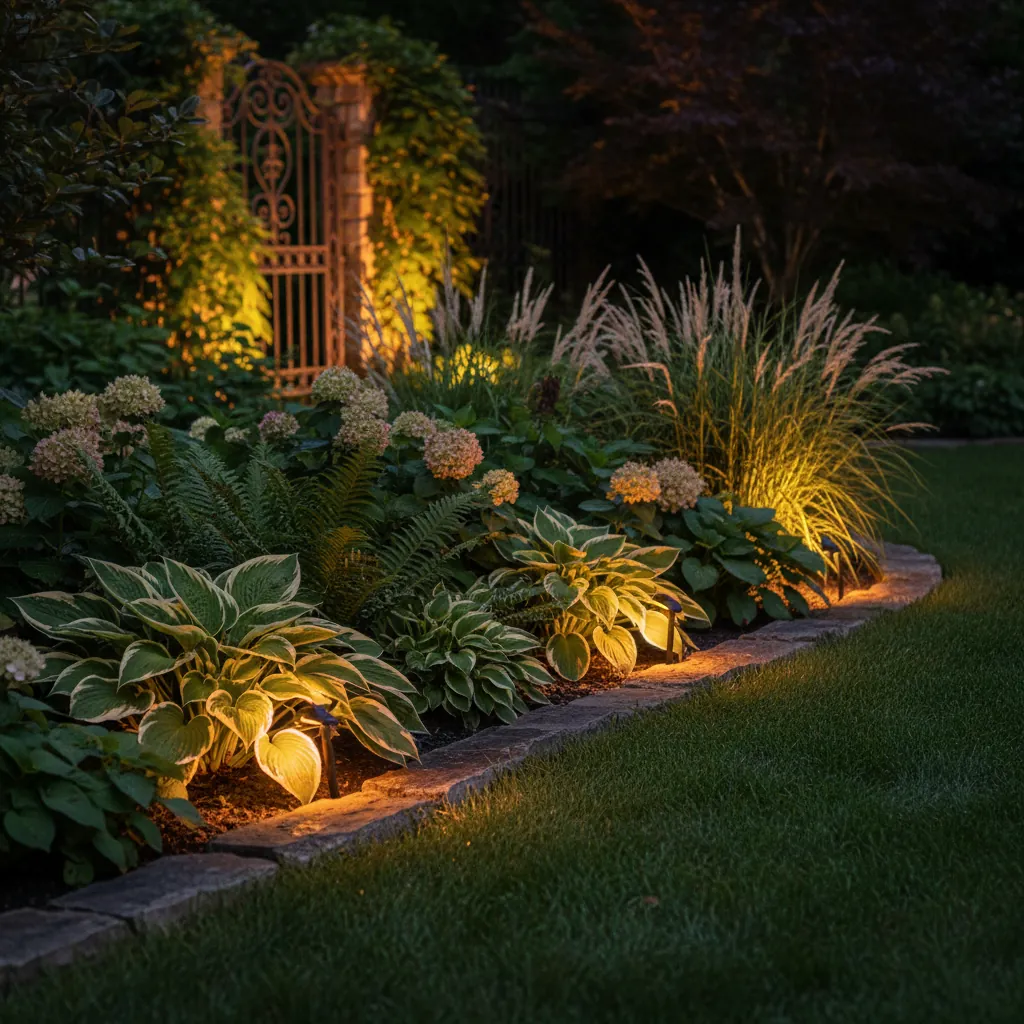
- Garden Bed Definition: Subtle illumination highlighting planting without drama
- Driveway Lighting: Safe vehicle navigation and parking areas
Downlighting Fixture Types
- Recessed Downlights: Conceal in eaves, soffits, pergola beams
- Surface-Mount Downlights: Mounted on exterior surfaces
- Tree-Mounted Downlights: Suspend from tree branches for canopy lighting
- Bollard Downlights: Low-level post fixtures with downward illumination
Typical Downlighting Specifications
- Output: 10-25W typical for residential pathways
- Mounting Height: 8-12 feet typical for eaves
- Spacing: 10-20 feet apart depending on area size
- Cost: $200-$500 per fixture installed
Professional Design: Layering Uplighting & Downlighting
The most sophisticated landscape lighting designs combine both techniques. Downlighting provides functional base illumination ensuring safety and navigation, while uplighting creates dramatic accent effects transforming landscape into an artistic nighttime composition.
Example Design 1: Estate Entry
Challenge: Create welcoming, safe entry while showcasing architectural beauty and mature landscaping.
Solution: Downlighting (eave-mounted) illuminates entry driveway and front door area for safety. Uplighting highlights mature oak trees and architectural corner stones. Result: Functional safety plus dramatic curb appeal.
Example Design 2: Garden Entertainment
Challenge: Create ambient entertaining space while highlighting garden features and maintaining safety.
Solution: Downlighting (from pergola) provides ambient deck illumination for comfortable entertaining. Uplighting on shrubs and water features creates landscape depth and visual interest. Result: Functional entertaining space plus garden showcase.
Example Design 3: Pathway with Accent
Challenge: Create safe nighttime pathway while highlighting distinctive architectural features.
Solution: Downlighting (bollards, low-level) defines safe pathway. Uplighting spotlights accent architectural trim and feature plants. Result: Safe navigation plus beautiful property transformation.
Example Design 4: Complete Property
Challenge: Illuminate entire property maintaining safety while creating outdoor entertainment hub.
Solution: Downlighting (entry, driveway, pathways) handles safety. Uplighting (trees, architectural features, garden accents) creates visual drama. Multiple zones with independent controls. Result: Professional, comprehensive property illumination.
Fixtures & Brands for Both Techniques
FX Luminaire
Premium commercial-grade uplights, downlights, and accent fixtures. CoolView (uplighting) and CoolSpot (accents) series rated IP67 with -40°C operation. Exceptional colour rendering (CRI 97+). Standard choice for high-end residential projects.
WAC Lighting
Professional systems with wide fixture selection. SPA and PLD series offer superior dimming and controls. Excellent for both uplight and downlight applications. Good mid-premium option for residential and commercial.
Kichler Professional
Design-forward fixture selection with excellent aesthetics. Solid construction and commercial durability. Good option for accent fixtures and contemporary landscapes.
Hinkley Lighting
Design-focused landscaping lights. Aesthetic appeal combined with durability. Wider price range offering value to premium options. Good for visible fixture applications.
Toronto Winter Durability
Uplighting Winter Challenges
Ground-level uplighting fixtures experience extreme moisture and freeze-thaw stress. All fixtures must be IP67-rated with sealed connections and GFCI protection. Professional installation includes proper drainage grading preventing water accumulation at fixture bases. Cable runs buried below frost line (48-60 inches).
Downlighting Winter Durability
Elevated downlighting fixtures (eaves, trees, posts) are protected from ground-level moisture and ice accumulation. IP65-rated minimum with sealed connections. Position fixtures above snow line and angle to prevent ice/snow buildup. Excellent winter durability with proper installation.
Uplighting vs Downlighting Pricing
Uplighting Project
Accent-focused design with 6-10 uplighting fixtures.
$1,500 - $3,500 CAD
Downlighting Project
Functional pathway/entry design with 4-8 downlights.
$1,200 - $2,800 CAD
Layered Design (Recommended)
Combined uplighting + downlighting, 12-18 fixtures.
$2,500 - $5,500+ CAD
Note: Both techniques cost $200-$500 per fixture. Project cost depends on fixture count and complexity, not technique selection. Layered designs use more fixtures but deliver superior visual results and functionality.
Recent Project: Comprehensive Layered Design
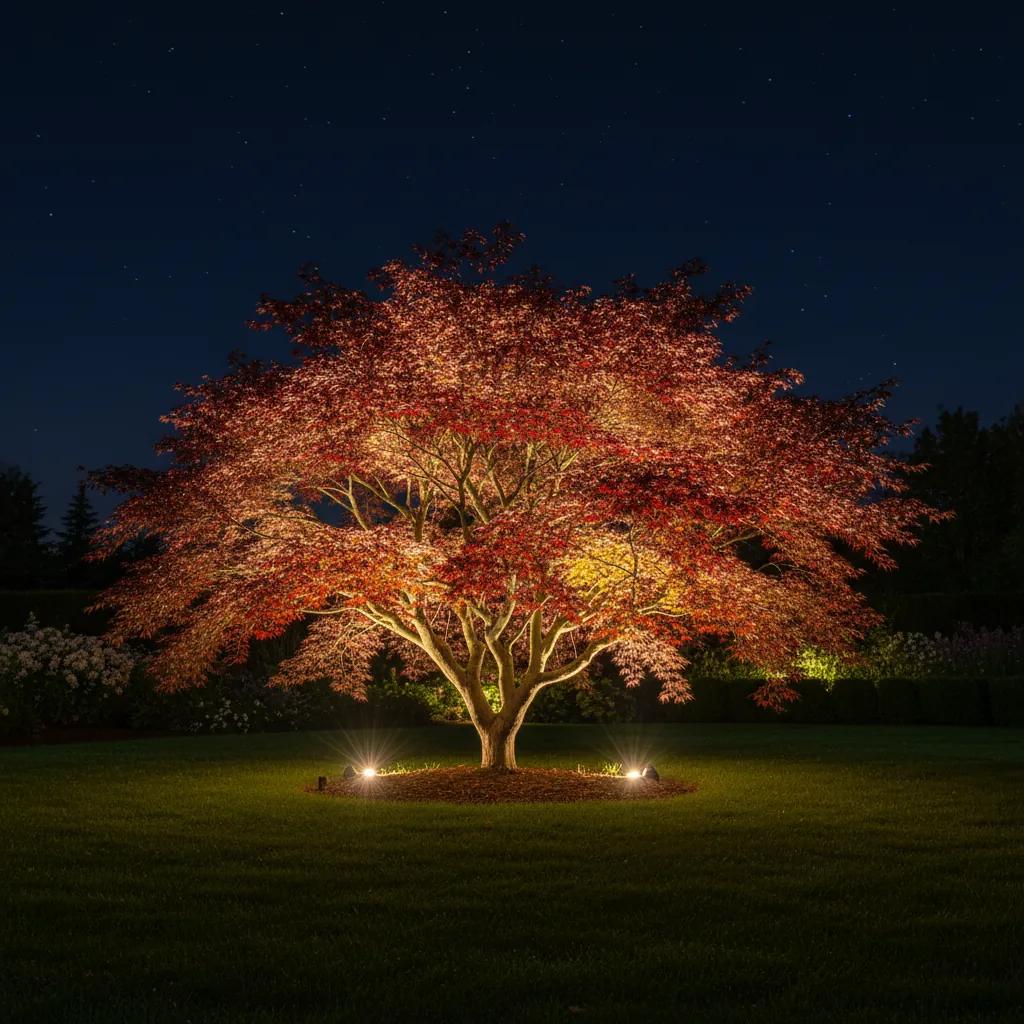
The Challenge
A Toronto home had only uplighting on trees (dramatic but limited). Entry was dark (safety concern). Driveway unmarked. Property appeared visually interesting only from certain angles. Limited functional illumination.
Our Solution
We added: downlighting for entry (safety), driveway bollards (guidance), soffit lighting (architectural definition), plus enhanced uplighting on trees and features. Result: Complete property transformation with safety plus drama. Multiple zones with independent controls.
Project Details
Scope: 8 enhanced uplights + 6 downlights + 8 bollards + soffit lighting | Budget: $4,200 CAD | Timeline: 3 days installation | Result: Professional comprehensive lighting, safe navigation, dramatic property transformation
Uplighting & Downlighting Gallery
Related Services
Tree & Shrub Lighting
Showcase landscape trees and shrubs with professional uplighting and accent fixtures.
Learn More →Architectural Facade Lighting
Uplighting and wall washing for stunning home exterior definition.
Learn More →Pool & Waterfall Lighting
Dramatic uplighting and downlighting for water features and pool areas.
Learn More →Serving Toronto, North York, Etobicoke, Scarborough, Mississauga, Brampton, Vaughan, Markham, Richmond Hill, Oakville, Burlington, and throughout the GTA.
Related Services
Architectural & Facade Lighting
Facade-focused uplighting for columns, stonework, and building features.
Learn More →Soffit & Eave Lighting
Roofline downlighting to complement uplighting for layered exterior effects.
Learn More →Tree & Shrub Lighting
Canopy uplighting and specimen tree highlighting using directional techniques.
Learn More →Serving Toronto and the Greater Toronto Area:
Further Reading
Tree Lighting Techniques Guide | Landscape Lighting Cost Guide
What Clients Say About Our Uplighting & Downlighting
"Had uplights on the house facade and downlights from the oak tree. The combination gives depth to the whole front yard. Looks professional, like a model home. The tree downlighting casts these natural shadow patterns on the lawn."
Sarah C.
Oakville
Combined facade up and tree downlighting
"We wanted moonlighting through our maple canopy. They mounted fixtures high in the tree and the effect at night is magical. Soft dappled light on the patio, zero glare. It looks like actual moonlight. Incredible."
Daniel R.
Toronto
Canopy moonlighting installation
"Got uplights on three architectural columns and downlights along the eave. The house looks completely different at night. We went with 2700K and the warm tone on the stone is perfect. Exactly what we showed them in the reference photos."
Lisa M.
Mississauga
Column uplighting with eave downlights
Frequently Asked Questions
What's the difference between uplighting and downlighting?
Uplighting positions fixtures at ground level pointing upward, creating dramatic silhouettes. Downlighting positions fixtures above pointing downward, providing functional illumination and safety.
When should I use uplighting?
Uplighting works best for trees, architectural features, and landscape accent elements. Creates dramatic silhouettes and emphasises shapes and texture.
When should I use downlighting?
Downlighting works best for pathways, entries, and functional illumination. Provides safe navigation, reduces glare, and creates inviting atmosphere.
Can I use both uplighting and downlighting together?
Yes, absolutely. Layering both techniques creates professional effects. Combine uplighting for accent with downlighting for functional illumination.
Which technique costs more?
Costs are similar per fixture ($200-$500 CAD). Total project cost depends on number of fixtures needed, not technique choice.
Are uplighting and downlighting durable through Toronto winters?
Yes. Both techniques use IP65+ rated, -40°C rated commercial-grade fixtures. Professional installation ensures reliable performance through Toronto winters.
Design Your Custom Uplighting & Downlighting Strategy
Professional lighting design combines both techniques for maximum impact. Our free consultation shows exactly how uplighting and downlighting work together on your property.