How to Light Trees & Shrubs: Professional Techniques Guide
By Sarah Blackwell | May 2026
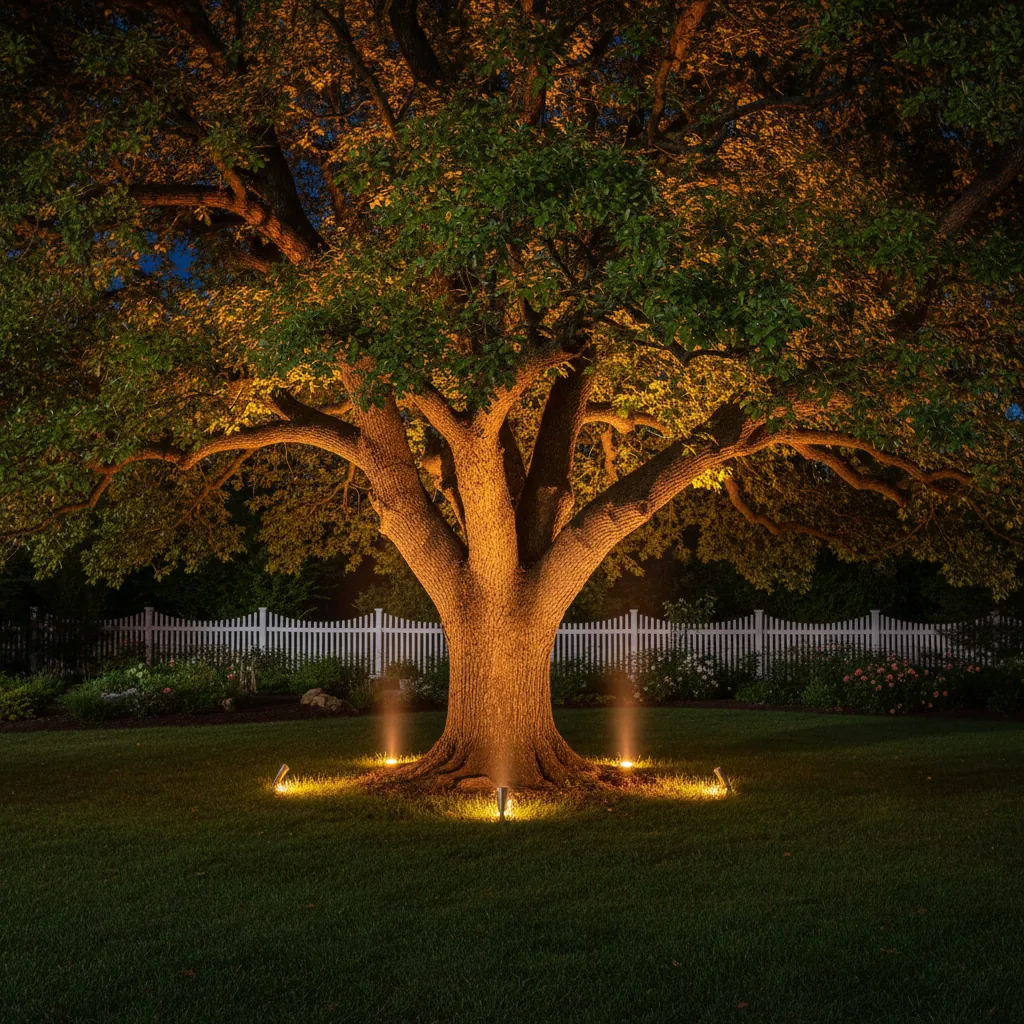
Trees and shrubs are the foundation of landscape design. During daylight, they provide structure, shade, colour, and privacy. After sunset, proper lighting transforms these landscape elements into dramatic focal points that add depth, dimension, and sophistication to your property. This comprehensive guide explains professional tree and shrub lighting techniques that landscapers and lighting specialists use to create stunning nocturnal effects.
Uplighting Technique
What is Uplighting: Uplighting positions fixtures at ground level, angling upward at 45-60 degrees to illuminate tree canopies and foliage from below. This creates dramatic uplighting effects that reveal tree form, canopy density, and overall silhouette. Uplighting is the most popular tree lighting technique because it creates maximum visual impact with minimal fixtures.
Fixture Placement: Position uplights 3-5 feet from tree base, angled upward. Space multiple fixtures around trees (typically 2-4 fixtures per mature tree) to ensure even illumination. For narrow trees, single uplights often suffice. Wide-canopy trees require multiple fixtures positioned to avoid dark shadows within canopy.
Best Trees for Uplighting: Uplighting works exceptionally well for specimens with interesting form, texture, or colour. Japanese maples with intricate branching, flowering crabapples with spring blossoms, evergreens with dense foliage, and paper birches with white bark all benefit from uplighting. Deciduous trees show dramatic branching patterns when lit during winter months.
Colour Temperature: Warm white (2700K-3000K) enhances natural foliage colours and creates inviting atmospheres ideal for residential properties. Cool white (5000K+) increases brightness and clarity, suitable for commercial applications or security-focused designs. Choose colour temperature based on desired mood and property context.
Moonlighting Technique
What is Moonlighting: Moonlighting simulates natural moonlight by positioning uplights high in tree canopies (often mounted 8-15 feet high in branches), angling downward to create soft, diffused light filtering through foliage. This creates natural-looking shadows and dappled light effects across ground-level landscapes below.
Installation Complexity: Moonlighting requires careful fixture mounting and secure installation at height. Fixtures must be securely fastened to branches or mounting brackets that accommodate growth and seasonal movement. Professional installation is essential for safety and proper positioning.
Best Trees for Moonlighting: Large, mature trees with dense canopies and spreading branch structures work best. Oaks, maples, lindens, and crabapples are excellent candidates. Avoid skinny, upright-form trees where branch mounting is impractical. The technique requires sufficient canopy density to create dappled light effect.
Visual Impact: Moonlighting creates romantic, sophisticated effects perfect for entertaining areas and garden spaces. Unlike uplighting that reveals dramatic tree form, moonlighting creates subtle shadow patterns across paths, patios, and surrounding plantings. This technique is popular in high-end residential landscape designs.
Grazing Technique
What is Grazing: Grazing illuminates textured surfaces (tree bark, ornamental grasses, plant foliage) by positioning fixtures very close to objects at shallow angles (15-30 degrees). This creates dramatic shadow patterns and texture highlighting that reveals details invisible during daylight.
Fixture Positioning: Position fixtures 1-2 feet from tree trunks, angled nearly horizontally. This grazes light across bark surfaces, creating dramatic texture highlighting. Grazing also works exceptionally well for ornamental grasses, shrub foliage, and stone walls where texture is desired focal point.
Best Applications: Grazing works especially well for trees with distinctive bark texture - birches with white bark, sycamores with exfoliating bark, and cork-bark trees. It also highlights Japanese maples with delicate foliage and ornamental grasses with fine structure. This advanced technique adds sophistication to professional landscape designs.
Glare Considerations: Grazing fixtures positioned at very shallow angles can create glare toward viewers. Careful fixture selection and positioning prevents uncomfortable glare while maintaining dramatic texture effects. LED fixtures with proper shielding minimise glare while maximizing texture highlighting.
Silhouetting Technique
What is Silhouetting: Silhouetting positions uplights behind trees, facing away from viewers, creating dark silhouettes against illuminated backgrounds (home facades, walls, or sky). This creates dramatic, sculptural effects that reveal tree form through shadow.
Installation Requirements: Silhouetting requires strategic fixture positioning behind specimen trees, angled toward background surfaces. Success depends on creating contrast between illuminated background and dark tree silhouette. This technique works best for trees with distinctive branching patterns or irregular canopy form.
Best Trees for Silhouetting: Japanese maples with delicate, intricate branching patterns create stunning silhouettes. Deciduous trees reveal detailed branching during winter months. Columnar or pyramidal trees with distinctive forms also work well. Avoid dense, rounded canopy trees where silhouetting creates bland shapes.
Design Considerations: Silhouetting is an advanced technique requiring careful planning and site-specific assessment. It works best on properties where trees are positioned in front of substantial background features (large homes, stone walls, or mature evergreen hedges) that can be illuminated dramatically.
Accent Uplighting Technique
What is Accent Uplighting: Accent uplighting uses narrower beam angles and lower wattage than standard uplighting, focusing light on specific tree sections - flowering branches, unique colour patches, or architectural features - rather than entire canopies.
Best Applications: Accent uplighting highlights flowering crabapples during spring blooms, highlighting colourful foliage in Japanese maples, or emphasizing unique specimen forms. This approach uses fewer fixtures than comprehensive uplighting while creating distinctive focal points.
Fixture Selection: Narrower-beam uplights (typically 15-30 degree beam angles) from FX Luminaire or WAC Lighting create concentrated accent effects. Standard uplights (40-60 degree beam angles) illuminate entire canopies. Choose fixture beam angles based on desired effect and tree size.
Colour Selection for Tree Lighting
Warm White (2700K-3000K): Creates inviting, residential atmospheres. Enhances natural foliage colours and complements warm architectural materials. Most popular for residential properties in Toronto. Creates romantic, sophisticated effects suitable for entertaining and relaxation areas.
Cool White (4000K-5000K): Increases brightness and clarity without warm tone. Suitable for commercial properties or security-focused designs. Can appear clinical in residential settings but works well for modern architecture.
Colour Variations: Some installations use adjustable colour systems allowing multiple lighting effects. RGB systems can change colours seasonally or for special occasions. However, most professional landscape lighting uses consistent warm white colour to maintain aesthetic continuity year-round.
Recommended Approach: For most Toronto residential properties, warm white (2700K-3000K) LED uplighting is the recommended standard. This colour temperature complements diverse landscape types, creates inviting atmospheres, and provides optimal colour rendering for natural materials.
Professional Design Principles
- Create focal points: Use lighting to establish visual hierarchy, guiding viewer attention to primary landscape features
- Balance symmetry: Mirror lighting on both sides of properties or symmetrical planting beds for professional appearance
- Minimize glare: Proper fixture selection and positioning prevents uncomfortable glare toward neighbours and viewers
- Layer lighting: Combine uplighting, accent lighting, and path lighting to create visual depth and interest
- Energy efficiency: LED technology enables sophisticated effects using minimal electricity
- Seasonal adaptation: Lighting effects change through seasons (spring blooms, summer density, autumn colour, winter branching)
Related Services
Related Articles
Professional tree lighting expertise across Etobicoke, Toronto, and surrounding GTA municipalities.
View Etobicoke Service AreaFrequently Asked Questions
How many fixtures do I need to light a tree?
Small trees (15-25 feet) typically need 1-2 uplights. Medium trees (25-40 feet) need 2-3 fixtures. Large trees (40+ feet) may require 3-5 fixtures positioned to ensure even canopy illumination without dark patches.
What colour temperature is best for trees?
Warm white (2700K-3000K) is recommended for residential tree lighting. It enhances natural foliage colours and creates inviting atmospheres ideal for most Toronto properties. Cool white works for commercial applications or modern architectural styles.
Do tree lights damage trees?
Properly installed landscape lighting does not damage trees. LED fixtures generate minimal heat (unlike halogen). Fixtures are mounted externally without penetrating tree trunks. Outdoor LED systems pose no harm to tree health or growth.
Can I add lighting to established trees?
Yes. Landscape lighting can be added to existing trees without damage. Professional installers position fixtures and cables to avoid damaging root systems and existing landscaping. Adding lighting to established properties is very common in Toronto.
What happens to tree lighting during winter?
Tree lighting remains fully operational through Toronto winters. Deciduous trees lose foliage, revealing dramatic branching patterns that look stunning when lit. Evergreens maintain structure and colour year-round. LED systems are rated for -30°C operation and perform reliably through Canadian winters.
Transform Your Trees Into Dramatic Focal Points
Schedule a free design consultation to explore professional tree lighting techniques for your property.
Get Free Design Consultation